24 Jun 2026
Tracing Game Flow Choices Across Digital Table and Reel Formats in Tiered Loyalty Challenges
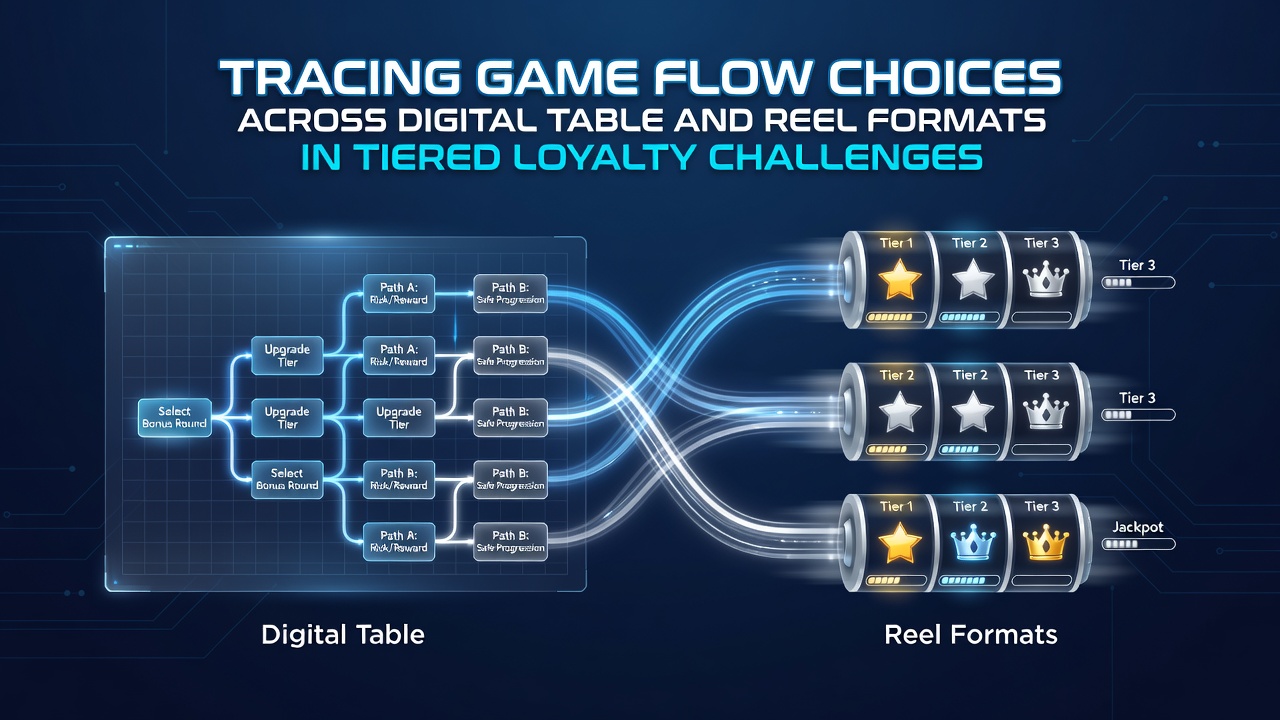
Digital platforms integrate tiered loyalty challenges that shape how participants select between table formats such as blackjack and roulette and reel formats such as video slots, and observers note that game flow patterns emerge as players advance through reward levels. Data from multiple operators reveals that entry-level participants often initiate sessions with reel games because these allow rapid spin cycles that accumulate points toward the next tier threshold, whereas those who reach mid-tier status shift toward table formats where decision points extend session duration and unlock bonus multipliers.
According to records compiled by the American Gaming Association, loyalty structures in digital environments track metrics including wager volume, session length, and game type selection, which in turn determine tier progression rates. Participants in lower tiers encounter challenges that reward consistent reel play through incremental point awards, yet once they cross into higher brackets the system introduces incentives that favor table game participation because these formats generate higher per-hand contributions to overall loyalty scores.
Mechanics of Tiered Challenges in Digital Settings
Operators design challenges around sequential milestones that reset monthly or quarterly, and June 2026 figures from several North American platforms indicate that completion rates for reel-based objectives exceed those for table-based tasks by measurable margins in base tiers. The flow begins with automated enrollment that assigns participants to an entry level, after which the platform monitors selections across both formats; each reel spin registers as one unit while each table decision registers as multiple units depending on stake size and game variant. This differential scoring creates visible pathways where players who favor reels progress steadily yet encounter ceilings that only table format engagement can surpass.
Comparative Flow Between Table and Reel Selections
Table formats require players to manage betting sequences and timing decisions that interact directly with loyalty multipliers, while reel formats emphasize volume through continuous autoplay options that feed into the same point system. Research compiled by the Australian Institute of Criminology shows that digital users who maintain mid-tier status allocate approximately 60 percent of their activity to table formats once they unlock corresponding rewards, a shift that alters overall game flow from rapid iteration to deliberate pacing. The platform interface displays real-time progress bars that update after each reel outcome or table resolution, and these visual cues guide subsequent choices without requiring external prompts.
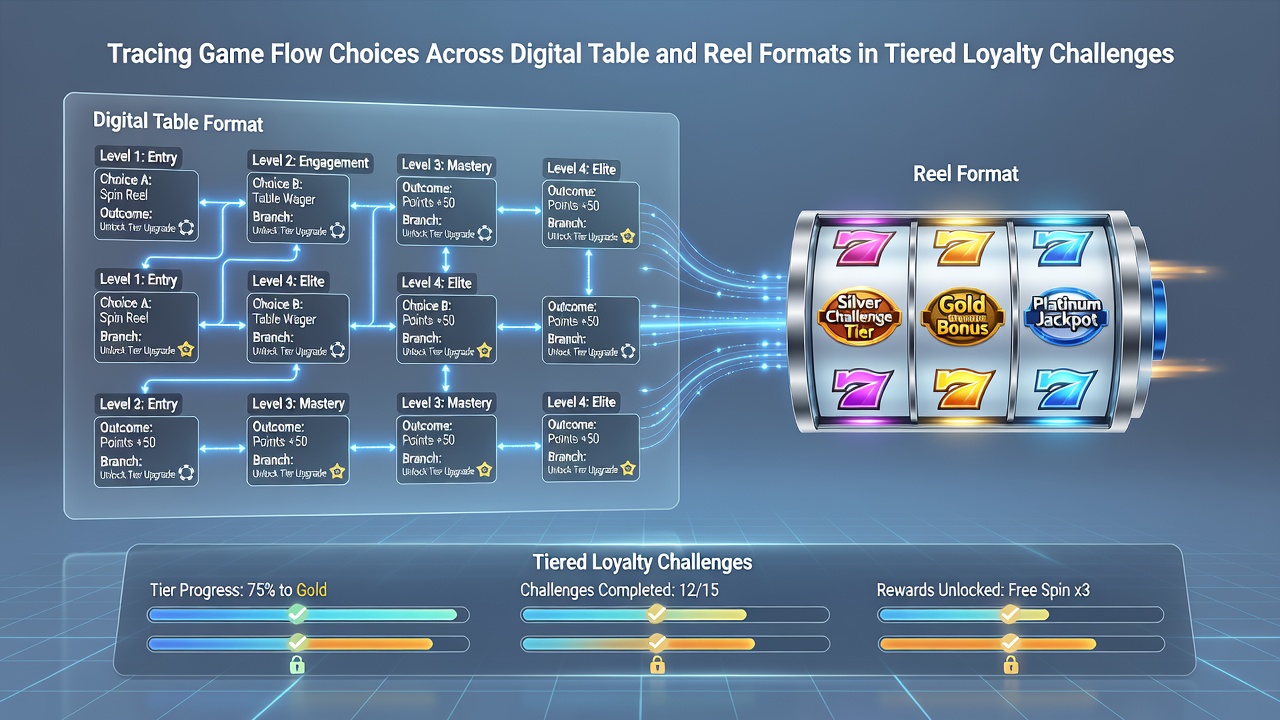
Those who study transaction logs observe that reel-heavy sequences dominate early challenge stages because they minimize downtime between rounds, whereas table-heavy sequences appear more frequently after participants secure elite tier benefits that include fee waivers and exclusive tournament entries. In June 2026 regulatory summaries from the Nevada Gaming Control Board, digital table activity within loyalty programs accounted for an increasing share of total handle compared with prior periods, suggesting that tier advancement correlates with format diversification rather than exclusive reliance on one category.
Data Patterns Across Jurisdictions
Cross-platform analysis conducted by independent research groups reveals consistent patterns where participants trace their game flow by alternating between formats to optimize point accrual against time invested. Lower tier challenges often list reel objectives first, which establishes initial momentum, but higher tier challenges introduce hybrid requirements that mandate both table rounds and reel spins within single sessions. This structure encourages fluid transitions documented in user behavior datasets, where session logs show switches occurring at predictable intervals aligned with loyalty meter updates.
Industry reports from the European Casino Association further document that digital environments facilitate these transitions through unified wallets and instant format switching, eliminating friction that once separated table and reel participation. Observers note that such integration allows participants to follow optimal paths determined by their current tier status and remaining challenge objectives, resulting in traceable sequences that operators can map for system refinement.
Conclusion
Patterns in game flow across digital table and reel formats within tiered loyalty challenges reflect structured reward mechanics that guide participant decisions at each level. Records indicate measurable shifts in format preference as individuals advance, with reel activity supporting initial progression and table engagement sustaining higher-tier momentum. As platforms continue to refine these systems, the traceable choices between formats provide clear indicators of how loyalty structures influence digital gaming sequences.